Microplastics are no longer just a problem for the environment — they’ve quietly infiltrated our bodies, turning up in our blood, organs, and even our brains.
Scientists are still working to figure out what this means for our long-term health, but one thing is for sure: measuring our exposure to these particles today is no easy feat. That’s why a new prototype from researchers at the University of Tartu in Estonia is so intriguing.
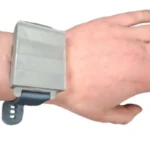
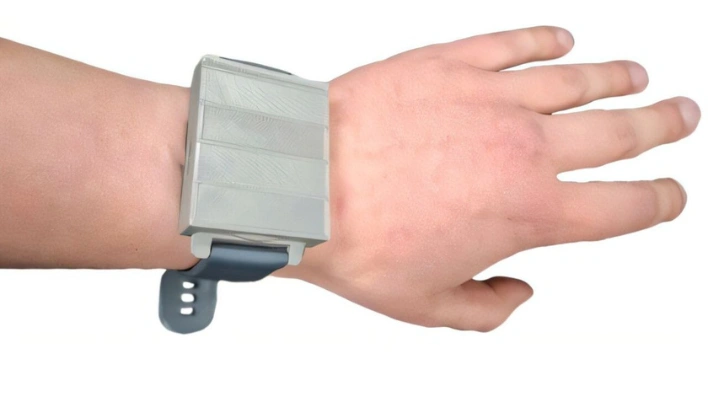
The device, called SWAN, looks a bit like a smartwatch, but instead of counting your steps or tracking your sleep, it’s designed to detect tiny plastic particles just under the skin — and it does this without any needles or lab tests. It’s an early concept, but it points to an exciting direction for the future of wearable technology.
A Different Way to Look Inside the Body
At the heart of the prototype is spectrometry — a method that studies how materials interact with light. The concept isn’t new, but shrinking it down into something wearable is what sets this project apart.
SWAN works by sending specific wavelengths of light into the skin and measuring how that light reflects back. Different materials scatter light in different ways, and plastics have their own recognizable patterns. By reading those patterns, the device can pick up traces of microplastics that would otherwise go unnoticed.
In testing, the system was able to detect particles as small as a grain of salt. Just as importantly, the researchers say it performs consistently across different skin tones — something that has historically been a challenge for optical sensors in wearables.
Built Simply — and That’s the Point
What stands out here isn’t just the concept, but how it’s been put together. The prototype uses readily available components, including a small spectrometer, LED lights, and a standard microcontroller. Altogether, the build comes in at roughly $105.
That relatively low cost suggests this isn’t just a lab experiment with expensive, hard-to-source parts. If the technology proves viable, scaling it into consumer devices might not be as far-fetched as it sounds.
Why Human Testing Hasn’t Happened Yet
For all its promise, SWAN is still very much in the testing phase. So far, it hasn’t been used on people.
Instead, researchers have relied on artificial models — materials like gelatin and pig skin that mimic how human tissue interacts with light. It’s a common approach in early-stage development, especially when safety is still being evaluated.
Part of the caution comes down to the light spectrum the device uses. Some of the wavelengths include low levels of UV light. While the exposure in testing is minimal, the team wants to fully understand how each wavelength affects accuracy — and ensure there’s no risk — before moving to real-world trials.
As lead researcher Kevin Post explained, this kind of step-by-step validation is standard practice when developing wearable technology.
Not Ready Yet — But Hard to Ignore
There’s still a long road ahead before something like this could end up on your wrist. Questions around accuracy, safety, and real-world reliability all need to be answered.
But the idea itself is compelling.
Wearables have already changed how people think about health, making it easier to track things like heart rate, sleep, and activity. A device that could monitor environmental exposure — something as invisible as microplastics — would take that a step further.
For now, SWAN is just a prototype sitting at the edge of what’s possible. But it offers a glimpse of a future where understanding what’s happening inside your body might not require a lab test — just a device you’re
Source: ACM Digital Library via University of Tartu