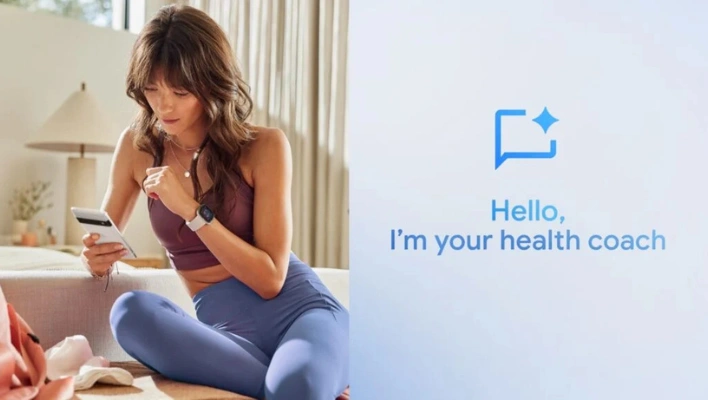
Fitbit is excited to expand its new Personal Health Coach feature to a much larger audience. Currently in Public Preview, this feature is now available to both free and Premium users on Android and iOS in 37 countries, including India.
You can expect a broader rollout in the coming weeks. This move is part of Fitbit’s ongoing transition from simply displaying numbers to genuinely helping users grasp what those numbers signify and what steps to take next.
A more useful take on your daily stats
At its core, the Health Coach sits inside the Fitbit app and leans on the data you’re already generating. That includes steps, distance, calories burned, sleep, weight, and body fat. Instead of leaving you to interpret charts, it tries to translate that data into simple suggestions and insights.
It also ties into Health Connect, so if you’re using other apps or devices, that data can be pulled in too. Fitbit doesn’t just mash everything together — it shows where each data point is coming from and lets you filter sources directly from the graphs. It’s a small touch, but one that makes the whole experience feel more transparent.
Fitbit has also brought VO2Max tracking (previously called Cardio Fitness Score) into the mix, adding a more serious fitness metric to the coaching experience.
Finally speaking your language
One of the more practical upgrades here is language support. The current version works in 27 languages, with plans to expand that to 32. That includes Hindi, French, German, Japanese, Korean, and Spanish.
It might not sound like a big deal at first, but it matters — especially for a feature that’s built around conversation. Being able to interact with the coach in your own language makes it far more usable day to day.
Still missing quite a bit
For all the progress, this is very much a work in progress.
Some basics are still absent. There’s no support yet for blood glucose tracking or body temperature, and you can’t manually tweak sleep data. If you’re into running, advanced metrics are also missing — even on newer devices like the Pixel Watch 3 and Pixel Watch 4.
The social side of Fitbit is also nowhere to be found here. No friends, no leaderboards, no badges, no messaging — nothing. It makes the experience feel a bit isolated compared to the regular app.
There are other gaps too. You can’t export TCX files, Aria Air scale syncing isn’t supported, and there’s no option to switch to a kids’ view.
Even Health Connect integration isn’t fully there yet. Data like workout sessions, routes, heart rate variability, breathing rate, resting heart rate, SpO2, and temperature are still missing — though Fitbit says they’re on the way.
The takeaway
Right now, Fitbit’s Personal Health Coach feels more like a preview of where the platform is heading than a finished feature you can fully rely on. The foundation is solid, and the idea makes sense — turn raw health data into something actually useful.
But until more features land and the gaps are filled, it’s not quite the all-in-one health companion Fitbit is aiming for. Still, it’s a step in the right direction — and one worth keeping an eye on.