Garmin might be about to make a significant move in the way athletes track their recovery.
A recently found trademark filing for “Muscle Battery” suggests that the company is investigating a performance metric based on muscle oxygen saturation a piece of information that hasn’t really been part of the mainstream wearable technology until now.
The filing, which was made public on February 19 but only recently noticed, describes software and algorithms designed to measure and analyze muscle oxygen levels. T
he language is notably detailed, indicating that this could be more than just a feature; it might be part of a larger system that could support future Garmin products.
A shift toward muscle-level insights
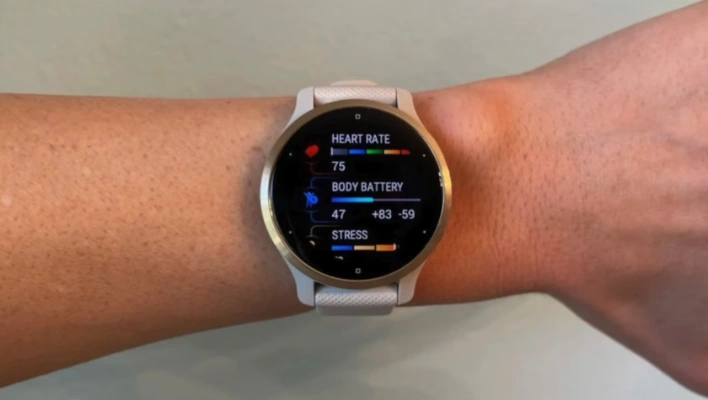
For years, Garmin has leaned on its well-known “Body Battery” feature to give users a simple, holistic view of energy levels based on sleep, stress and recovery. “Muscle Battery,” if it reaches consumers, appears to take a more targeted approach.
Rather than estimating overall readiness, the new metric would focus on how individual muscle groups are coping with strain. That could be especially useful for runners, cyclists and strength athletes — anyone whose training regularly pushes specific muscles to their limits.
In practical terms, it could help answer questions many athletes already wrestle with: Are your legs truly recovered after yesterday’s intervals? Is it smart to push through another heavy session, or are your muscles still fatigued beneath the surface?
That kind of insight has been difficult to access without specialized equipment. Muscle oxygen saturation (often referred to as SmO2) is currently tracked mostly by niche devices like the Moxy Monitor, rather than mainstream smartwatches.
Hardware implications
The specificity of Garmin’s filing also hints at something beyond software alone. Measuring muscle oxygen typically requires dedicated sensors, suggesting that new hardware could be in development alongside the feature.
If that proves true, it would mark a notable expansion of Garmin’s sensor stack — and potentially give the company an edge in the increasingly competitive recovery-tech space.
A possible link to CIRQA
Timing adds another layer of intrigue. The “Muscle Battery” trademark was filed just days before Garmin submitted paperwork for “CIRQA,” another name believed to be tied to a recovery-focused wearable.
While there’s no official connection, the proximity of the filings raises the possibility of a broader strategy. A lightweight, screenless recovery band paired with deeper muscle-level analytics could position Garmin against rivals pushing into similar territory.
There’s also a competitive angle to consider. A recent patent from Whoop points to future devices capable of measuring muscle oxygenation. If Garmin brings the feature to market first, it could leapfrog current-generation recovery trackers.
Still early days
For now, “Muscle Battery” remains just a trademark — not a confirmed feature or product. But the level of detail in the filing makes it more than a routine defensive move. It reads like an early blueprint for where Garmin’s performance tracking could be heading next.
If the company can successfully bring muscle oxygen insights into a consumer-friendly wearable, it could reshape how athletes think about recovery — moving from general readiness to something far more precise.
And in a market where marginal gains matter, that kind of detail could make all the difference.
Source: USPTO