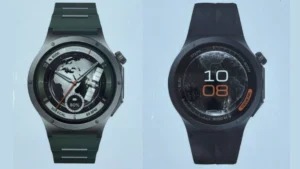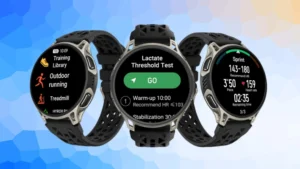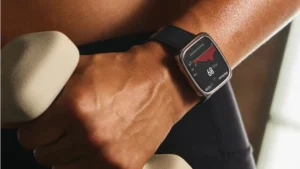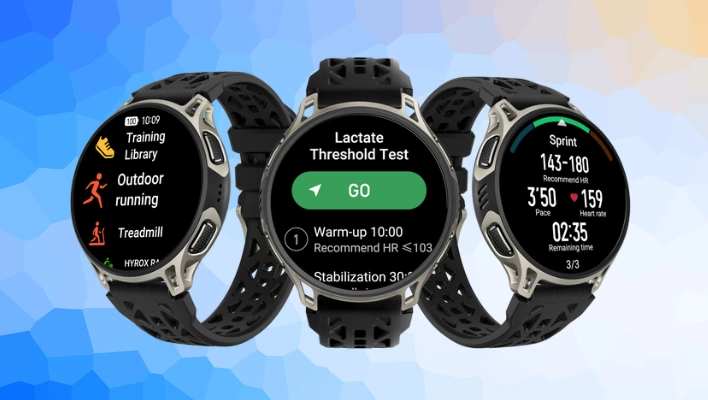
After a few weeks of quiet appearances on the wrists of professional athletes, Zepp Health has officially introduced the Amazfit Cheetah 2 Pro.
This latest model is a more sophisticated and ambitious version of the company’s running-focused series, showcasing high-quality materials, better navigation, and a long-lasting battery.
Right off the bat, it’s obvious that this isn’t merely a routine update.
Premium materials finally take center stage
The biggest shift comes in build quality. The Cheetah 2 Pro swaps out more conventional materials for a titanium alloy case paired with sapphire glass, instantly putting it in a different league compared to its predecessor.
It still sticks with a 48mm round form factor, but the finish and durability feel more aligned with higher-end sports watches.
The familiar four-button layout remains, which is a smart move. For runners, especially in wet or high-intensity conditions, physical controls often matter more than touch responsiveness.
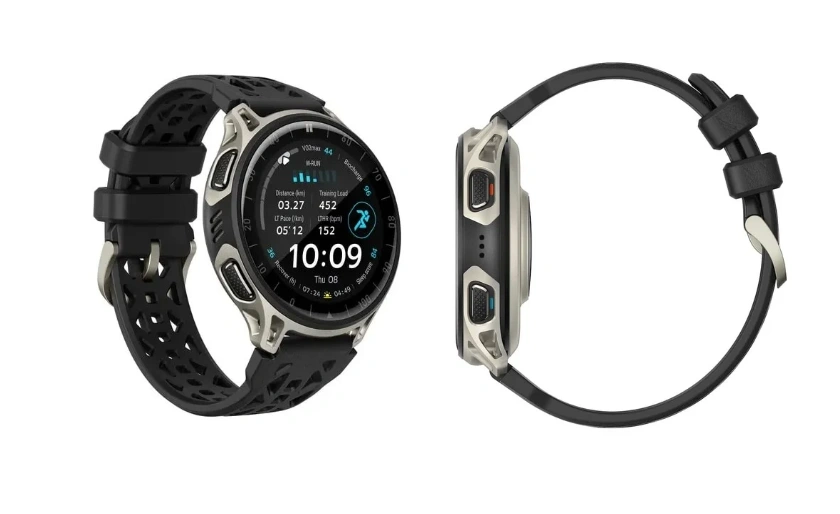
On the front, Amazfit has fitted a 1.32-inch AMOLED display with a resolution of 466 x 466 and brightness rated at an impressive 3000 nits.
That should translate to excellent outdoor visibility—even under harsh sunlight.
If there’s a small caveat, sapphire glass tends to attract fingerprints, something we’ve seen on other recent Amazfit models.
Built for runners who go further
Under the hood, the Cheetah 2 Pro is clearly engineered with endurance athletes in mind. It supports 170 workout modes, backed by a full suite of satellite systems including GPS, Galileo, GLONASS, BeiDou, and QZSS.
More importantly, it upgrades to dual-band GNSS, which should improve tracking precision in dense urban areas or tricky environments like forests and mountains.
Navigation is another area where this watch steps up. Offline maps and route guidance are built in, making it a practical option for trail runners or anyone training in unfamiliar territory.
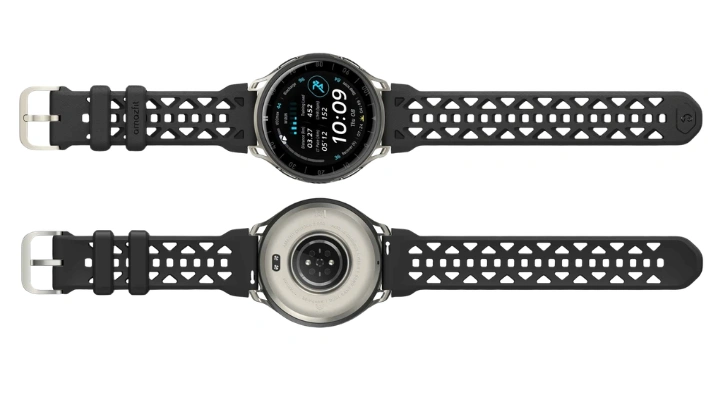
Combined with 32GB of internal storage, there’s enough room for maps, workouts, and even offline music.
A nice addition borrowed from Amazfit’s rugged lineup is the dual LED illumination system, offering both white and red light modes.
Along with Boost and SOS features, it adds a layer of safety for early morning or late-night runs.
Battery life still a major selling point
Battery performance continues to be one of Amazfit’s strongest cards. The company claims up to 20 days on a single charge, a figure that will inevitably catch the attention of runners frustrated with frequent charging cycles on competing devices.
Of course, real-world usage—especially with heavy GPS tracking—will bring that number down, but even so, it’s likely to outperform many rivals in its category.
Smart features round out the experience
Despite its performance-first approach, the Cheetah 2 Pro doesn’t ignore everyday usability.
It includes a built-in speaker and microphone, along with Bluetooth 5.3 and Wi-Fi connectivity, making it a capable smartwatch beyond training sessions.
Amazfit Cheetah 2 Pro – Specifications
| Display | 1.32-inch AMOLED |
| Resolution | 466 × 466 pixels (353 ppi) |
| Brightness | Up to 3000 nits |
| Build | Titanium alloy case, Sapphire glass |
| Size & Weight | 48mm case, 45.6g |
| Water Resistance | 5 ATM |
| Battery | 540mAh, up to 20 days |
| Storage | 32GB |
| Connectivity | Bluetooth 5.3, Wi-Fi |
| GPS | Dual-band (GPS, Galileo, GLONASS, BeiDou, QZSS) |
| Navigation | Offline maps & route guidance |
| Audio | Speaker & microphone |
| Workout Modes | 170+ |
Pricing and early impressions
The Amazfit Cheetah 2 Pro comes with a price tag of $449, which is quite a leap from the original model’s launch price of $299.
This price hike reflects the enhanced materials and a broader range of features, but it also puts the watch in closer competition with more established brands.
On paper, it seems like a well-rounded package. While there isn’t a standout feature that completely revolutionizes the experience, the mix of high-quality construction, a brilliantly bright display, improved GPS accuracy, and effective navigation tools makes this upgrade quite appealing.
Ultimately, the true test will be how it performs in everyday situations—especially regarding GPS reliability and heart rate monitoring.
As it stands, Amazfit seems to be steering its running lineup toward a more serious, performance-focused approach.
Source: Amazfit